

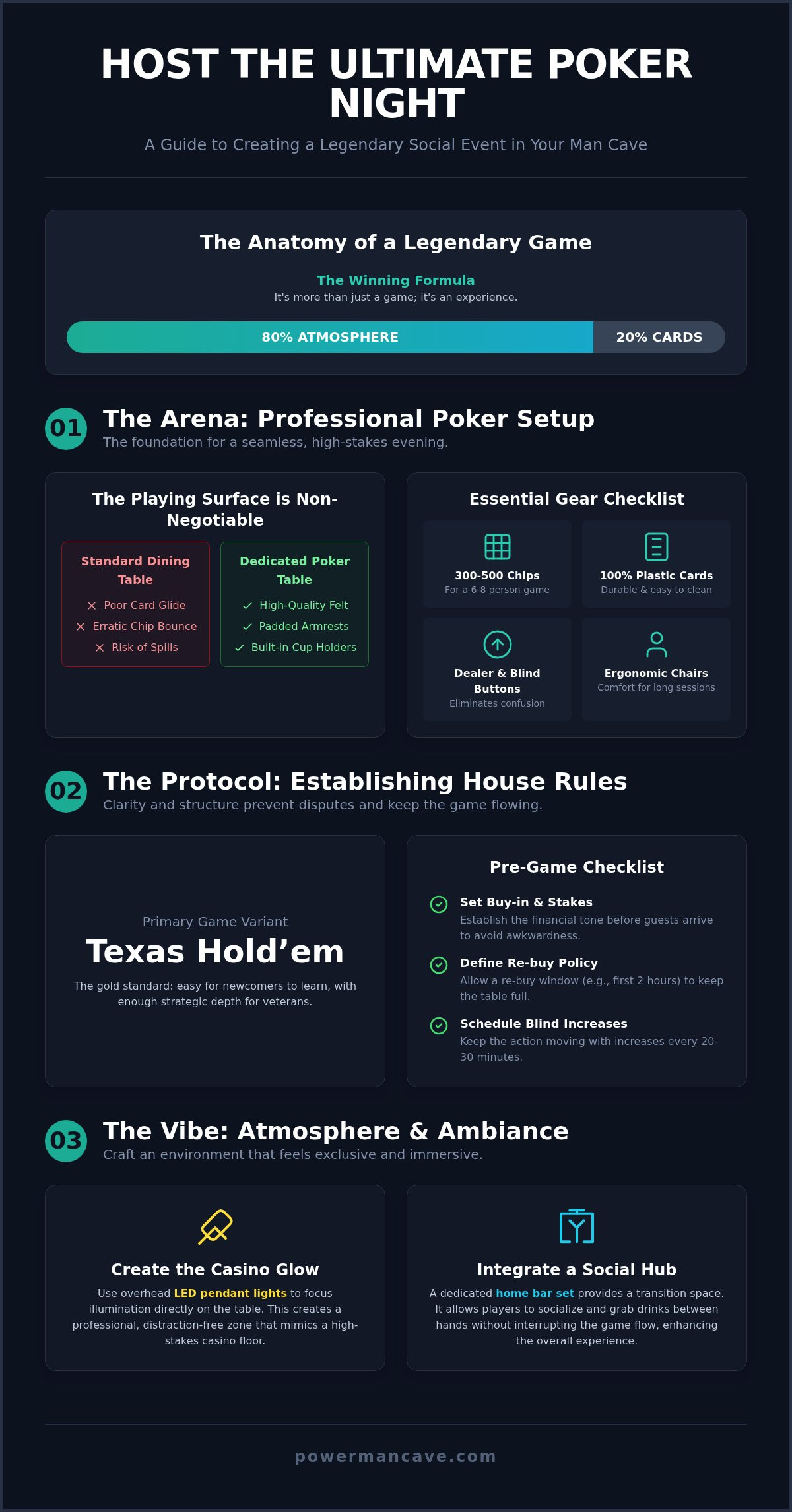
The difference between a forgettable Tuesday and a legendary social event is 20% cards and 80% atmosphere. You don't just want to play a game; you want to curate an evening that feels like an exclusive, high-stakes retreat in your own home. Learning how to host a poker night that rivals a Vegas suite requires more than just a deck of cards and a bag of chips. It's about the pride of ownership that comes from a perfectly lit room, a steady table, and a seamless flow that keeps the focus on the cards.
You've likely felt the frustration of a game grinding to a halt because of poor lighting or a lack of clear house rules. We understand that you want your man cave to be the go-to destination for your inner circle, and we're here to help you achieve that vision. This comprehensive checklist will help you master the art of hosting by covering every detail from professional-grade equipment to the ultimate bar setup. We'll walk you through selecting the right poker tables, calculating precise chip counts for your players, and installing the LED pendant lights needed to create that authentic casino glow.
Key Takeaways
- Learn the essential steps of how to host a poker night that balances professional-grade equipment with a relaxed, high-stakes social atmosphere.
- Discover why a dedicated poker table with a high-quality felt surface is the non-negotiable centerpiece for ensuring smooth card slides and authentic chip bounce.
- Elevate your man cave's aesthetic using overhead LED pendant lights to create a focused environment that mimics the professional feel of a casino floor.
- Understand the value of integrating a home bar set to provide a dedicated transition space for players to socialize between hands without interrupting the game flow.
- Establish clear house protocols and game variants like Texas Hold’em to ensure a seamless, repeatable experience for both beginners and seasoned players.
The Arena: Building Your Professional Poker Setup
The foundation of a legendary game isn't found in the cards; it's built into the table beneath them. If you're serious about learning how to host a poker night that people actually want to attend, you have to treat your space like a professional arena. A dedicated poker table with a high-quality felt surface is your most important investment. Standard dining tables create friction that ruins a card's glide and causes chips to bounce erratically. A professional felt surface ensures that every shuffle and deal feels like a high-stakes event, providing the tactile feedback that players expect from a curated social space.
Logistics and comfort dictate the longevity of your game. Ergonomics aren't just for the office; they're vital for a four-hour session where players are constantly leaning in and adjusting their posture. Select chairs that offer firm lumbar support and breathable materials to keep your guests focused on the flop rather than their back pain. To keep the game moving, you'll need the right supply count. For a standard 6-8 person game, ensure you have a set of at least 300-500 chips. While paper cards might work for a single night, you should prioritize 100% plastic cards. They're durable, easy to clean, and impossible to "mark" accidentally, maintaining the integrity of your game.
Selecting the Right Poker Table
Your floor plan will determine whether a permanent or folding table is the right fit for your retreat. Permanent tables offer unparalleled stability and act as a striking centerpiece for your man cave, while high-end folding options provide flexibility without sacrificing the professional feel. Look for features that enhance the player experience, such as built-in cup holders to prevent devastating spills on the playing surface and padded armrests for those intense, high-stakes moments. For a deeper look at the best options available today, check out our luxury poker tables for man cave guide for the 2026 definitive roundup.
The Essential Accessory Checklist
Professional pacing is what separates a backyard hobby from a legendary social event. Use a clear dealer button and "Big Blind/Small Blind" markers to eliminate confusion about turn order. Incorporating automatic card shufflers can significantly increase the number of hands played per hour, keeping the energy high and the transitions seamless. Always use a "cut card" to hide the bottom of the deck during the deal. These small details, combined with a solid understanding of poker rules and variants, demonstrate that you're a specialist who is genuinely invested in the quality of the game. This level of preparation ensures your event becomes a repeatable, highly anticipated highlight of the social calendar.
Software and Rules: Establishing the House Protocol
Structure is the spine of a legendary evening. When you're figuring out how to host a poker night, clarity is your best friend. Start by selecting Texas Hold’em as your primary variant. It's the gold standard for a reason; it's easy for newcomers to grasp but offers enough strategic depth for the veterans in your group. Establish the buy-in and stakes before guests arrive. This sets the tone for the evening, whether it's a friendly low-stakes buy-in or a more competitive clash. Defining these details early prevents awkward conversations once the chips are on the table.
Consistency keeps the game moving and the atmosphere positive. Define your re-buy policy before the first hand is dealt. Nothing kills the momentum like a player being knocked out in the first twenty minutes with no way back in. Allow for a specific re-buy window, perhaps during the first two hours, to keep the table full and the energy high. Setting these "House Rules" early prevents mid-game disputes that can sour the mood. If you want to ensure your setup matches this level of play, consider exploring the professional poker tables available for your home sanctuary.
Standardizing Your Game Flow
A professional game requires a predictable rhythm. Start by assigning a rotating dealer where the button moves clockwise after every hand to ensure everyone shares the responsibility. To keep the action moving, set a clear schedule for blind increases, such as every twenty or thirty minutes. High-quality poker etiquette is essential here. Ban "string bets", where a player puts chips out in multiple motions, to maintain professionalism and avoid confusion. Learning how to host a poker night that people respect means treating the game with the same seriousness as a casino floor.
The House Rules Checklist
Reliability is the hallmark of a great host. Implement a cell phone policy to ensure distraction-free gaming; players should step away from the table for calls to keep the pace brisk. Establish a protocol for "showing cards" to prevent players who aren't in the hand from gaining or giving away unfair information. Finally, set a hard end-time. Finishing on a high note ensures your guests leave wanting more, making your game a repeatable staple of their social calendar.
Atmosphere and Ambiance: The Man Cave Vibe
The ambiance of your retreat is what transforms a simple card game into a legendary social event. When you're mastering how to host a poker night, you're essentially acting as a lifestyle architect. Lighting is the most critical element for both visibility and psychological impact. You need to eliminate shadows that make it difficult to read cards or see your opponents' faces. Overhead pendant lights are essential here; they create a focused "poker pit" while leaving the rest of the room in a softer, more relaxed glow. This mimics the professional casino floor and anchors the table as the room’s centerpiece.
Beyond the visual, consider the sensory experience of your guests. A room filled with eight people can quickly become stuffy, so ensure your ventilation system is up to the task. Curate a background soundscape that sits just below the level of conversation. You want music that adds energy without forcing players to shout over the beats. This is where professional hosting tips become invaluable; keeping your guests comfortable ensures they stay engaged with the game longer. Finally, protect your investment by establishing a "No-Spill Zone." Position side tables and heavy-duty coasters away from the main playing surface to keep drinks off the felt.
Strategic Lighting for Poker
Install LED pendant lights directly over the table center to provide crisp, even illumination across every seat. Dimmable options are a game-changer, allowing you to shift the mood from a bright, energetic start to a more intense, focused vibe as the stakes rise. For a premium aesthetic that commands attention, explore the DecorBites LED Pendant Light. It’s designed to provide the perfect balance of style and functional clarity for high-end entertainment spaces.
Curating the Social Environment
A great host plans for the lifecycle of the entire evening. Provide secondary seating, such as home theater chairs or a lounge area, for players who have "busted out" of the game but want to stay for the conversation. You can even use smart lighting to signal break times or the start of the final table by shifting colors or intensity. Maintaining a clean "poker pit" throughout the night is essential. Learning how to host a poker night that feels exclusive means clearing away used glasses and empty snack bowls during breaks to keep the environment organized and sharp.
Hospitality: Snacks, Drinks, and Service
True hospitality in a high-stakes environment is about seamless logistics. When you're perfecting how to host a poker night, your goal is to provide fuel without interrupting the game's momentum. The "One-Handed" Snack Rule is your guiding principle: serve food that can be eaten without looking away from your cards and, more importantly, without leaving grease on the felt. Buffalo wings and greasy chips are legendary for ruining expensive card decks and staining professional table surfaces. Instead, focus on snacks that keep hands clean and the game moving.
Pacing your service is just as important as the menu itself. While a self-service model allows you to remain focused on your own strategy, a completely unmanaged setup can lead to clutter and spills. A hybrid approach often works best. Set up a dedicated refreshment area that players can access during breaks or while they're out of a hand. If you plan on serving a heavier "Main Course," schedule a formal twenty-minute break. This keeps the table clean and gives everyone a chance to reset their focus before the blinds get serious.
The Poker Night Menu
Prioritize "clean" finger foods like pretzels, mixed nuts, and chilled grapes. These options provide the necessary energy without the mess. It's vital to set up your food station on a separate sideboard or bar area. This physically separates the eating zone from the "poker pit," drastically reducing the risk of a player knocking a bowl of salsa onto your table. For a truly elevated experience, serve your refreshments in high-quality glassware. Using weighted rocks glasses or premium tumblers reinforces the exclusive aesthetic you've worked hard to build.
Managing the Drink Flow
A well-stocked bar is the hallmark of a professional host. Offer a curated selection of craft beers and perhaps a signature cocktail that matches the night's theme. Variety is essential; always balance your alcohol selection with plenty of sparkling water and non-alcoholic options to keep everyone sharp. To prevent constant trips to the kitchen, keep a bar fridge or a high-end cooler within arm’s reach of the table. Ensure you have an ample supply of ice ready before the first guest arrives. If you're looking to upgrade your setup with a professional serving space, explore our premium home bars to complete your entertainment retreat.
The Ultimate Upgrade: Integrating a Home Bar Set
The ultimate way to finalize your retreat is to look beyond the felt. While the table is the centerpiece of the action, a dedicated bar set for home acts as the vital support system for your entire evening. Integrating a high-end bar creates a sophisticated transition space where players can decompress between hands or socialize after a tough beat. It physically separates the intensity of the "poker pit" from the relaxation of the lounge, which is a key secret in learning how to host a poker night that feels like a professional club rather than a casual gathering. This separation of zones ensures that your primary playing surface remains a focused arena for strategy.
Organization is the foundation of this setup. A well-designed bar provides specialized storage for spirits, mixers, and glassware, ensuring everything you need is accessible without cluttering your playing area. Positioning is everything; place your bar along a perimeter wall to maximize your man cave's floor space and maintain clear walking paths. This layout allows for a natural flow of movement, preventing the room from feeling cramped when the stakes get high and the guest list grows. When you provide a dedicated space for refreshments, you're telling your guests that their comfort is just as important as the game itself.
Choosing Your Bar Set for Home
Deciding between a wet bar and a dry bar depends largely on your existing plumbing access and how you plan to use the space. Wet bars offer the convenience of a sink for quick cleanups, while dry bars provide exceptional storage and serving surfaces without the need for pipework. To maintain a cohesive look, match the wood finish or architectural style of your bar to your poker table. This visual alignment signals that your man cave is a curated, intentional space. For more detailed setup ideas, check out our guide on bars for home to find the perfect fit for your lifestyle.
The Bar as a Social Hub
A bar does more than just hold bottles; it serves as a secondary anchor for the room. Using high-quality bar stools allows you to provide additional seating for guests who aren't currently in a hand, keeping them involved in the conversation without crowding the dealer. This setup significantly increases the perceived value of your hosting, making your home the preferred destination for your social circle. A well-stocked, beautifully designed bar transforms your space into a personal sanctuary. You can find more design inspiration in our home bar furniture guide to help you build the ultimate social hub for your next game.
Claim Your Seat at the Head of the Table
Mastering how to host a poker night is about more than just shuffling cards; it's about engineering an experience that commands respect. By investing in a professional-grade setup and establishing clear house protocols, you transform your man cave into a legendary social sanctuary. From the focused glow of overhead LED lighting to the seamless flow of a dedicated home bar, every detail you've planned ensures your guests leave with stories to tell. This isn't just a game; it's the creation of a personal retreat that will host years of connection and competition.
Ready to build your personal retreat? Upgrade your game room with a premium Poker Table from Power Man Cave. We offer free shipping on all continental US orders and provide expert support to help you plan your custom man cave layouts. Our selection features high-end materials like solid wood and professional felt to ensure your setup is built for the long haul. Your next legendary game is just one decision away. Take the lead, set the stakes, and enjoy the pride of owning the ultimate entertainment space.
Frequently Asked Questions
How many people should I invite for a standard poker night?
Aim for 6 to 9 players, including yourself. This range ensures the table feels full and the action stays consistent without becoming overcrowded. Most professional home poker tables are designed to seat exactly 8 to 10 people comfortably. Inviting 7 friends is often the sweet spot, as it allows for a few cancellations while still maintaining a high-energy game with plenty of strategic variety and social interaction.
What is the best poker game for beginners to play at home?
Texas Hold’em is undeniably the best variant for home games involving beginners. Its rules are straightforward, as players only need to manage two hole cards and five community cards. Because it's the most televised version of the game, many guests will already have a basic understanding of the hand rankings. This familiarity reduces interruptions and allows you to focus on the nuances of how to host a poker night that everyone enjoys.
How much money should the buy-in be for a friendly game?
A standard friendly buy-in typically ranges between $20 and $50. This amount is high enough to make the chips feel valuable and discourage reckless play, yet low enough that losing it won't ruin anyone's evening. You want the stakes to encourage competitive strategy while keeping the atmosphere relaxed. Always announce the buy-in amount a week in advance so every player arrives with the correct expectations and cash on hand.
What kind of poker chips are best for a home man cave?
Clay composite chips weighing between 11.5g and 14g are the gold standard for a premium man cave setup. These chips provide the satisfying weight and "clack" sound associated with professional casinos. While plastic sets are cheaper, clay composites offer better durability and a textured surface that makes stacking and shuffling much easier. Investing in a high-quality set ensures your game feels like an exclusive, high-stakes event rather than a casual hobby.
How do I handle a player who is taking the game too seriously?
Address the behavior early by reinforcing the "social first" nature of your house rules. If a player becomes overly aggressive or creates tension, use a scheduled break to have a private, professional conversation. Remind them that the goal is connection and relaxation. As the host, you set the tone; maintaining a lighthearted but structured environment helps prevent one person's intensity from overshadowing the group's collective enjoyment of the night.
What is the best way to distribute chips at the start of the night?
Standardize your starting stacks to include 50 to 60 chips per person. For a 6-8 person game, you'll want a total count of 300 to 500 chips. A common distribution for a tournament style includes 8 to 10 chips of the lowest value, 8 to 10 of the next, and so on. Prepare these stacks in advance and place them at each seat to ensure a seamless, professional start when guests arrive.
How long does a typical home poker game last?
A well-managed home game usually lasts between three and five hours. This timeframe allows for a full tournament progression or several rounds of cash play without exhausting your guests. To keep the night on schedule, set a hard end-time and use a blind timer to ensure the stakes rise at regular intervals. Finishing on a high note ensures your poker night remains a repeatable and highly anticipated social event.
Can I host a poker night without a dedicated poker table?
You can use a dining table, but it significantly compromises the player experience. Without a felt surface, cards don't slide and chips bounce loudly off the hard wood. If a permanent table doesn't fit your space, consider a high-quality table topper. However, when learning how to host a poker night that feels truly legendary, a dedicated table with built-in cup holders and padded armrests remains the essential centerpiece for long-term comfort.